
Speech coach in your pocket
You know you ramble.
Nobody tells you where.
Speak for 30 seconds. Get the sentence that lost the room, the filler count, and the one thing to fix next. Not a grade. A note you can act on before the meeting.

First speech and full report are free.
No account needed to try it.
Listening
Most speaking apps give you a score.
This one tells you what to change.

In about ten seconds
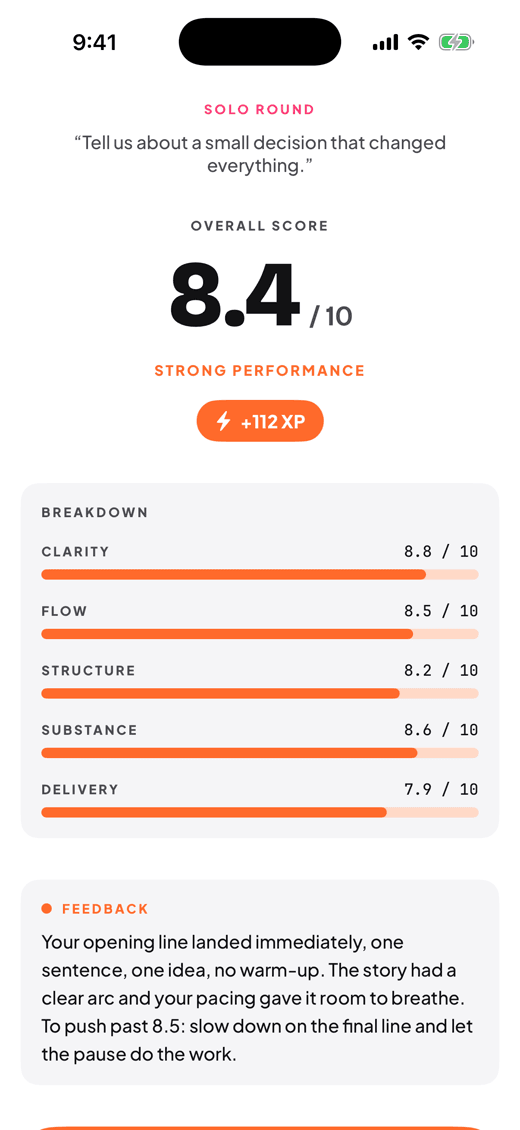
Five scores, not one
Clarity, flow, structure, substance and delivery, scored separately. A 6.2 overall tells you nothing. A 4.1 on structure tells you what to practise tonight.
The part people pay for
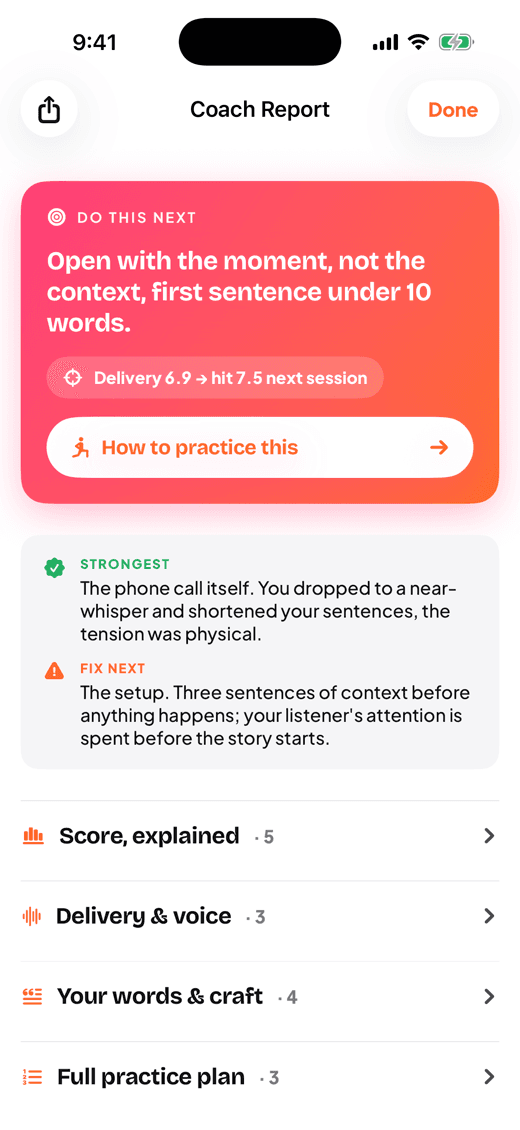
It quotes you back
The exact sentence where you lost the thread, what to say instead, how many fillers and where they cluster. It reads like notes from someone who was listening.

When practice gets boring
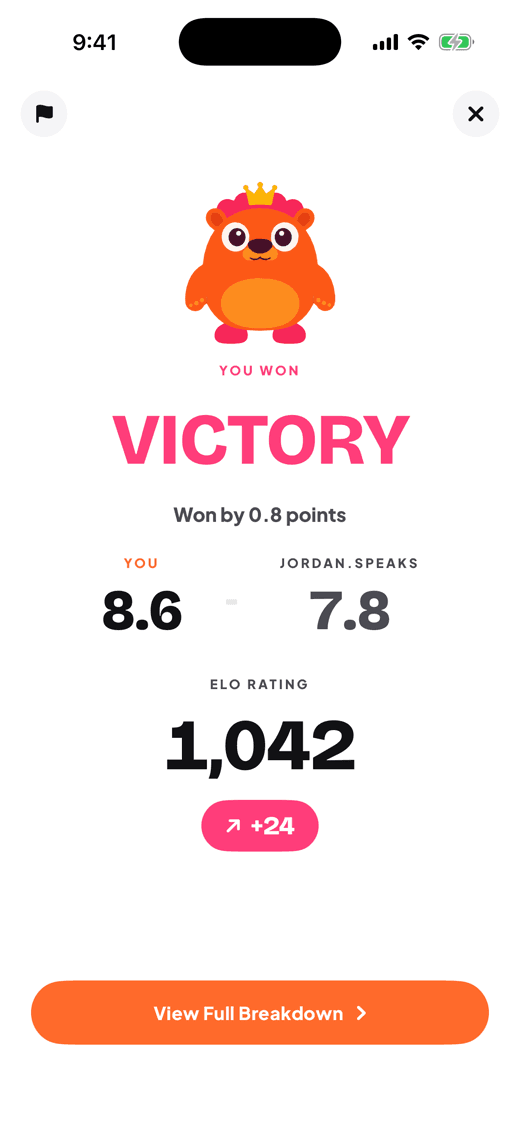
Speak against someone
Same prompt, same clock, judged side by side, ELO on the line. It is the reason people come back on day nine instead of day two.
Thirty seconds a day sounds too small to work.
It is the shape the research keeps pointing at. Short, spaced, and fed back on. The reason most people never improve at speaking is not effort, it is that nobody is in the room to tell them what went wrong.
Practice without feedback plateaus
Deliberate practice research is consistent on this: repetition alone stops producing gains once you are competent. The feedback is the active ingredient, and it is the part solo practice never has.
Ericsson, 1993
Short and spaced beats long and rare
Spacing the same total practice across more days produces materially better retention than massing it. Thirty seconds daily is not a compromise on an hour weekly. It is the better shape.
Cepeda, 2006

Find out what you actually sound like.
One prompt, thirty seconds, a full report. Free, and you do not need an account to see it.
Free daily prompt forever. Pro unlocks unlimited practice and every report, or unlock a single report or duel transcript on its own.